
First pixels, everywhere
We’ve reached our first milestone: the foundations of PixelCore Engine and PixelCore Game Studio are standing, and the same scene now runs on macOS, iOS, Android and Linux.
When we introduced PixelCore Engine, we said the first stage was about foundations: proving the core of the engine and Game Studio on every platform we support, so everything after stands on solid ground. That stage’s work is done. Here’s what works, and where.
One scene, every screen
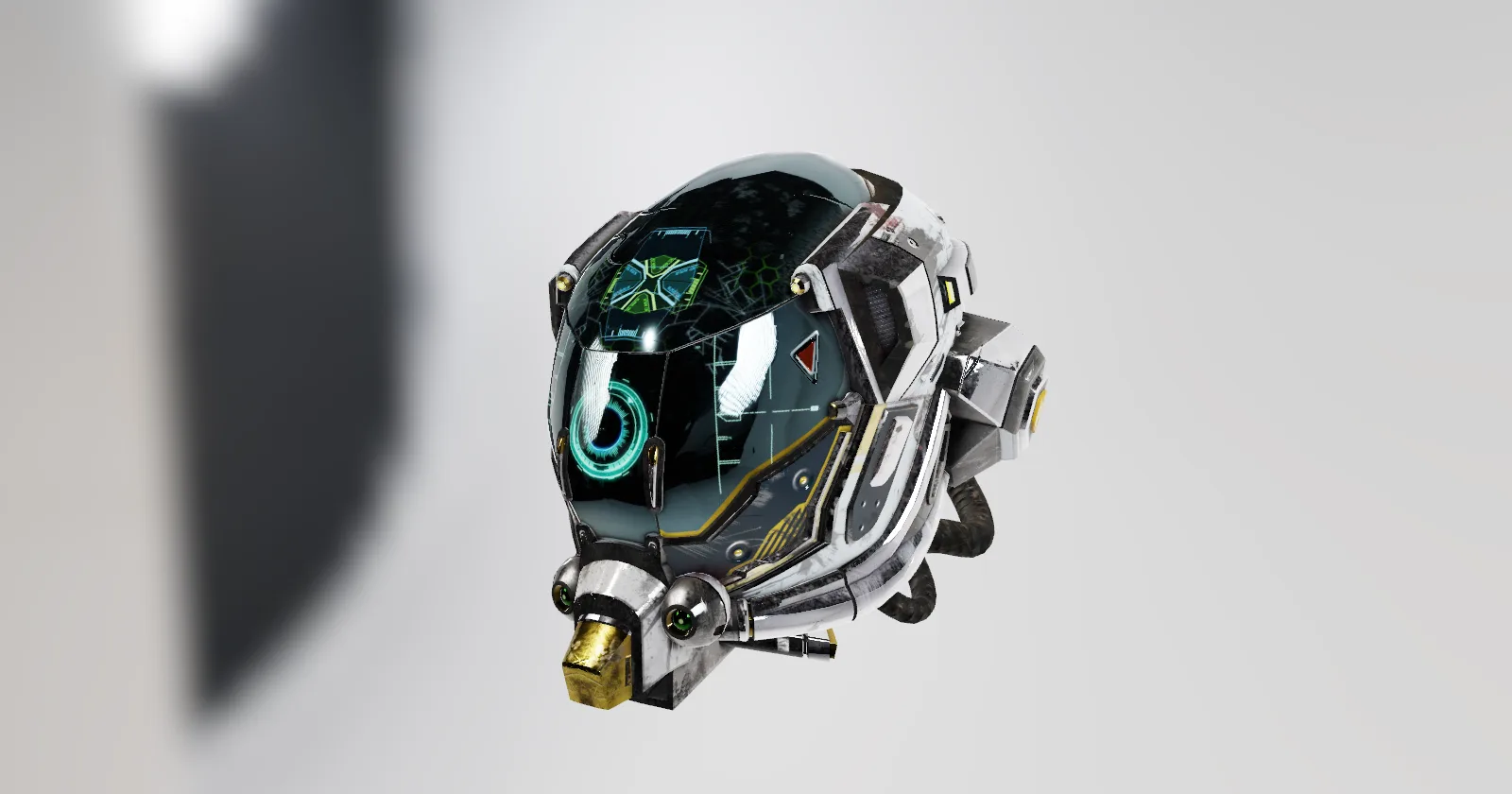
A fully lit, textured 3D model, with realistic materials, soft image-based lighting and smooth edges, now renders from one codebase on macOS, iOS, Android and Linux. On a Mac it runs at the display’s full refresh rate. On iOS and Android you drag to orbit and pinch to zoom, in portrait or landscape.
Windows is next.
The first PixelCore Game Studio window
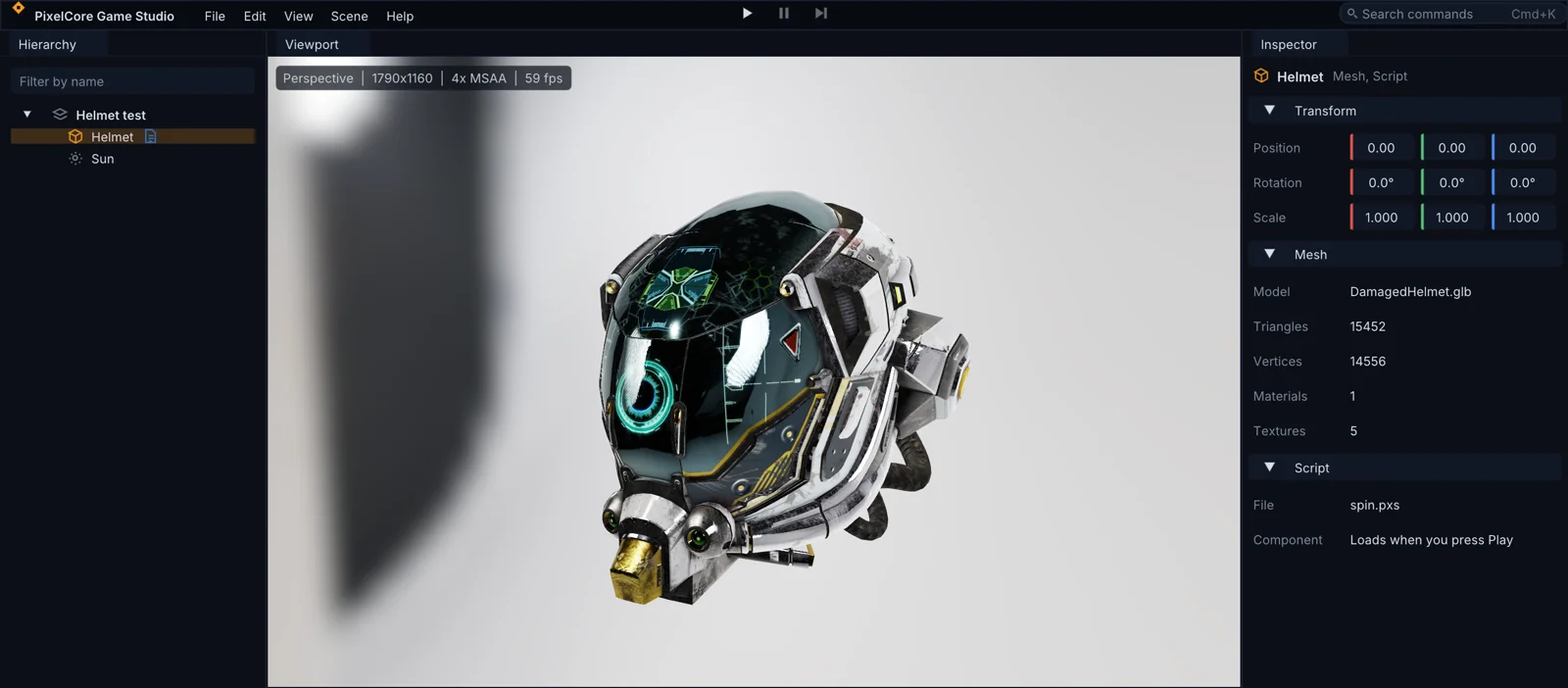
Game Studio now opens a scene in a live viewport you can orbit and frame, with panels you can dock anywhere or pull out into their own windows. Pick something in the hierarchy and the inspector shows it; drag a value and the scene updates as you go. Every edit can be undone and redone, and a whole drag undoes as one step. Press Cmd+K to search every command. Press Play and the scene’s scripts run; press Stop and the scene goes back exactly as it was.
Scripts you can change while the game runs
PixelScript is running too. Save a script while the game plays and the change is live in a couple of milliseconds, without restarting. The game keeps its state: a door that was open stays open, while a value you just changed in the script takes effect at once.
Make a mistake and you get a clear message on screen, with the line and column, while the game keeps running the last version that worked. Fix it, save, and the message goes away.
Built for teams from day one
Scenes save as short, readable text that version control can compare and merge. When two people edit the same scene, say one moves a light while the other renames a character, their changes combine without a fight. When they really do change the same thing, only that one line needs a decision.
And the games you make carry no surprise conditions from the code inside the engine, only a short list of credits.
Everything here is in development. Features, names and dates may change, and we’ll say so when they do.
What’s next
Next, we turn these foundations into the real engine and Game Studio, and start building one of SeriousPlay’s games on them. You’ll see Game Studio grow, and more of it running on phones, in the dev diaries along the way.